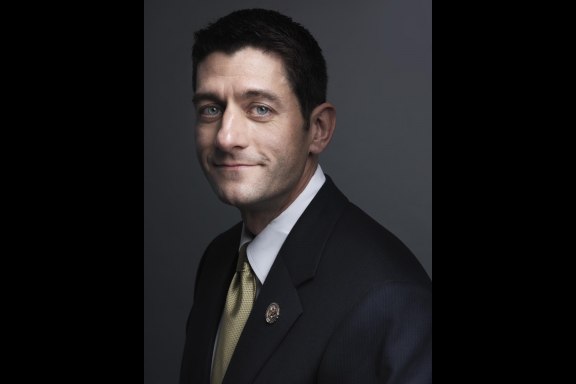
 Yeah, Paul Ryan is killing Romney’s chances:
Mitt Romney’s campaign has raised $10 million since announcing Rep. Paul Ryan as Romney’s running mate.
The Republican’s presidential campaign announced the cash surge on Friday as part of a memo that highlighted a boost in polls it said Romney had gained by picking Ryan, a Wisconsin Republican.
The memo from Matt Rhoades, Romney’s campaign manager, said 68 percent of donations this week were from new donors, and that the average donation was $81. The average donation amount is something President Obama’s campaign often points to in arguing it has more grassroots support from small donors than does Romney.
The numbers released by the campaign suggest the choice to add Ryan,a conservative Wisconsin Republican, to Romney’s ticket stirred up grassroots support.
Since the selection, liberal pundits and reporters have worked hard to make the pick appear to be toxic to the campaign. Apparently, the only people believing that are the few who actually what MSNBC and read the New York Times.
So, not many.
Laugh out loud funny:
Hat Tip: Breitbart
Tolerance:
Have fun at the Polk County lockup, moonbats.
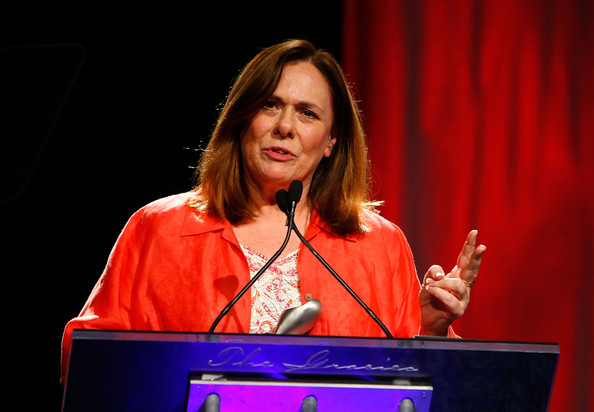
Anyone who believes the October 16th Townhall style Presidential debate will be fair and honest from the perspective of the moderator needs to put down the lighter and step away from the bong.
The moderator has been announced and it’s CNN’s Candy Crowley. Yes, the same Candy Crowley that believes Romney’s choice of Paul Ryan is “some sort of ticket death wish” and said so on national television.
Expect Romney to be pressed on Bain and tax returns. Expect no questions to Obama about the domestic terrorists he used to hang out with and his hidden college records.
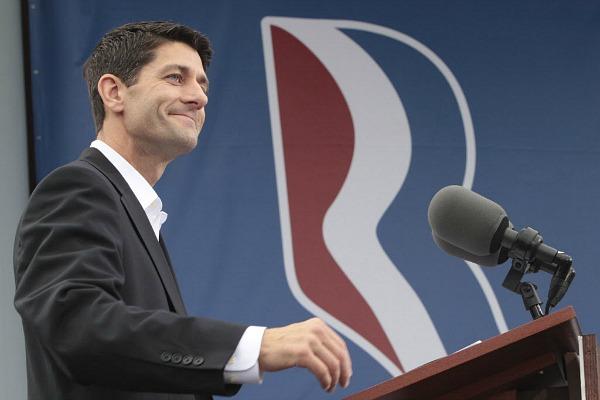
HotAir.com has the break down that we’ll get to shortly. First, the total overnight haul is $3.5 million according to one Romney spokesperson.
This is the most powerful crystallizing moment the Romney campaign has had since the Supreme Court’s ObamaCare decision; Romney raised $4.2 million within 24 hours of that decision.
The palpable excitement over Ryan’s selection contrasts sharply with Barack Obama’s announcement of Joe Biden 2008. In August of 2008, when Obama picked Biden, contributions to the Obama campaign actually decreased from the previous month.
That’s a huge number and considering the Romney camp is running an agressive nationwide email and online fundraising effort today… the 48 hour number is likely to balloon.
Here’s the breakdown via HotAir.com.
- Donors: over 41,000
- Average donation: $85
- Website visits: 700,000
That looks like a lot of “I’m now ready” nods coming in.

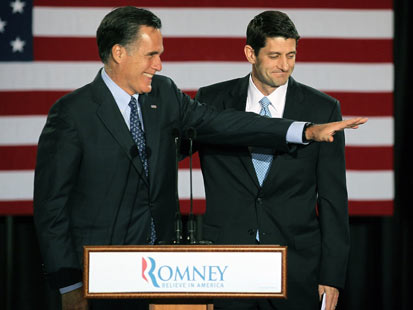
Rumors were suggesting a bold pick and that is exactly what it turned out to be. Paul Ryan is, without question, a bold and courageous pick on the part of Romney.
Republican presidential candidate Mitt Romney has picked Congressman Paul Ryan as his vice presidential running mate, the Romney campaign confirmed on Saturday.
“Mitt’s choice for VP is Paul Ryan. Spread the word about America’s comeback team,” a Romney campaign app said, confirming widespread reports he had selected the 42-year-old Wisconsin lawmaker who chairs the U.S. House of Representatives Budget Committee.
Personally, I think this is a solid choice and will be perfect for the ticket. Why? Because Romney is not known as an idea guy and Paul Ryan is. In fact, Paul Ryan is brilliant when it comes to actual solutions to problems in government, and this is where a huge void has existed to date in the battle between Obama and Romney.
I’ve already seen quite a few on Twitter saying this means Obama’s crew will begin the “throw grandma off the cliff” narrative now that Ryan is a part of the team, but the fact is the Dem machine stooped lower than that already… without Paul Ryan. So far they’ve called Romney a felon, a tax cheat and a murderer.
They’re going to make stuff up and throw mud at Romney no matter what he does. He might as well put together a package ideas he can run on and against Obama, and Paul Ryan is the right guy to help make it happen.
Additionally, this places Wisconsin in significant play. More on that later.
In the meantime… there it is, folks. The Romney/Ryan ticket is now in motion.


Since the dawn of the modern primary system, the brokered convention — one that begins without a clear nominee — has been assumed to be a thing of the past. With the process now democratized, the voters are left to sort out the nomination, and almost always end up settling on one candidate early into the process. The proverbial ‘smoke-filled rooms’ in which party elites collectively anoint a candidate by passing ballot after ballot is but a relic of yesteryear. And history bears this out: since the nominating process was handed over to individuals voting in primaries and caucuses, the nominee has never been unknown in the days leading up to the convention.
Still, prior to this year, no one had won the South Carolina primary without having first won either Iowa or New Hampshire, either — and here we are, assessing the aftermath of a Newt Gingrich blowout, despite his dismal finishes in those two states. Neither had we ever witnessed such a loopy merry-go-round in the polls, in which every major candidate running became, at least for a time, a frontrunner.
In other words: history repeats itself — until it doesn’t. And so the specter of a brokered convention hovers over the race.
Though typically a formality, when the party convenes every four years, a ballot is cast by the delegates to the convention to choose the party’s nominee. John McCain, George W. Bush, Bob Dole — none of these men had any reason to expect that they’d collect anything less than 99-100% of these delegates. When that voting begins, delegates are obliged to vote in favor of the candidate for whom they are pledged. But if no candidate reaches the 50% threshold on that first ballot, all of the delegates are released to vote for whomever they please — and from there, all chaos breaks loose.
This has never happened within the modern system. Could this time be different?
It remains a distant possibility, and requires a perfect storm of events to occur. But if there’s ever been a year for strange things to happen in presidential politics, it’s this one.
Most intriguingly, The chorus grows ever-louder for a late entrant to the race.
Bill Kristol has been something of a one-man band this year, pining for a new contender, but the voices are growing more numerous: Ross Douthat recently conceded that we actually do deserve better than Mitt Romney and Newt Gingrich, and a new Rasmussen poll shows that a third of the party still would like another candidate to emerge (another tenth are open to persuasion). Andrea Mitchell of NBC has even revealed that party elites will attempt to force a draft of a new candidate if Mitt Romney cannot win Florida.
Two things make this a remote, though plausible, scenario.
First of all, the calendar is backlogged. There are five weeks between the Florida primary and Super Tuesday. The inevitable media boom that would accompany a late entrant would give him instant viability and at least three full weeks to make his case. He’d be given the opportunity to prove his mettle in debates on multiple occasions, and party elites — fundrasiers, senators, governors — would finally get off of the sidelines and assemble a national-level campaign for him virtually overnight. Imagine a Bobby Jindal candidacy, for instance, backed up by Paul Ryan, Mitch Daniels, and Jeb Bush, as well as a handful of senators and Congressmen. A team of wealthy bundlers assembles $10 million for him in the course of two weeks, he debates competently, and he’s the singular fixation of the media for a month.
Is it really so implausible that he could collect at least a quarter of the vote?
Second of all, the delegate allocation is proportional, rather than mostly winner-take-all, as it was in 2008. This not only increases the viability of a write-in campaign in states where the ballot deadline has passed (and if anyone doubts their potential, ask Senator Lisa Murkowski), but makes the late entrant’s pathway that much clearer: even if he can only come up with 20-25% of the delegates, that’s all he needs, since he remains the clear consensus candidate at a brokered convention.
Barring a late entrant, the key to a brokered convention is probably Ron Paul. The list of states where the Texas Congressman is slated to collect a sizable number of delegates is quite lengthy, and relies heavily on caucus states. His organization is impeccable — he’s the only candidate besides Romney on the Virginia ballot, for instance — and if he can collect 10-15% of the delegates, it leaves only 85-90% left for Mitt and Newt (and a possible late entrant) to earn. Winning 51% out of 100% is a lot easier than winning a full 51% out of that remaining 85%.
Paul will not surrender his delegates. He will not, like Hillary Clinton in 2008 or Ronald Reagan in 1976, concede defeat and move on with his life. If he can keep both Mitt and Newt under 50% of the delegate total, then all bets are off.
A protracted race with Paul remaining in play puts a brokered convention fully within the realm of possibility (imagine Newt and Mitt each with approximately 45% of the delegates and Ron Paul with 10%). A viable late entrant virtually guarantees a brokered convention.
Ultimately, this probably won’t come to pass — such fantasy scenarios are basically like crack for political junkies, and nothing more. But it sure is difficult to deny that the possibility exists. Never say never.
-Alex Knepper
—————————–
Alex Knepper has written for several right-of-center blogs, including The Minority Report Blog, Race42012, and FrumForum. He writes from an individualist perspective, both politically and culturally, and characterizes his thought as being animated by a deep suspicion toward dominant institutions, ideologies, and individuals. In 2009, University Wire named him one of the best 100 student journalists in the country. His work has been discussed or excerpted in outlets such as the New York Times, The Atlantic, and NPR, and has been translated into several languages. More information can be found at his personal website, AlexKnepper.com.

Copyright © 2011 Vanguard of Freedom
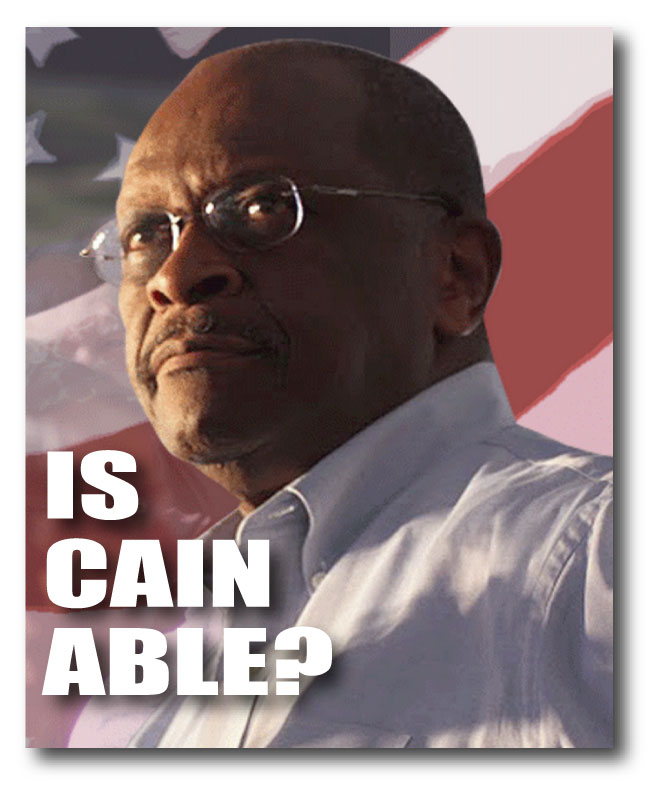
GOP Candidate for President Herman Cain just won the Florida Straw Poll this evening with 37 percent of the vote, edging out Rick Perry (15%), Mitt Romney (14%), Rick Santorum (11%), Ron Paul (10.5%), Jon Huntsman (2%), and Michele Bachmann (1%).
This might be the year that this poll does not matter, will not make a difference in the standings or in the final result, because this year IS different and there are very significant factors contributing to its uniqueness.
However, in the past, this poll has predicted the GOP nominee.
FOX NEWS quotes Herman Cain and then continues:
“This is a sign of our growing momentum and my candidacy that cannot be ignored. I will continue to share my message of ‘common sense solutions’ across this country and look forward to spending more time in Florida, a critical state for both the nomination and the general election,” he said.
“Perry, who was expected to finish strong had told the more than 3,000 GOP activists who came from across the state that his rivals made a mistake by skipping the straw poll..
“Romney and Bachmann had both left Florida before the voting began and their campaigns discounted the straw poll’s role in the campaign.
“Other first-tier candidates hadn’t actively organized for the Florida vote, either. So the results probably won’t shuffle the campaign’s standings and were shaping up as little more than a popularity contest among the delegates selected by local party organizations.
“Ahead of the test vote, Perry’s campaign bought breakfast for hundreds of the party faithful assembled for a three-day conference and debate. Perry said skipping the straw poll was a blunder…’I think that’s a big mistake. I think it’s very important,’ Perry said, citing its history.
“Previous straw polls have predicted the GOP nominee. Ronald Reagan won in 1979, George H.W. Bush in 1987 and Kansas Sen. Bob Dole in 1995. The Republican Party of Florida, however, has not organized the test vote in recent years.
“Perry, a late entrant into the Republican primary who quickly led national polls, stumbled in recent weeks.
See the full article HERE
How does this poll and its standings affect the candidates as they jockey for position for the GOP nomination in 2012?
If the poll signifies anything at this point it is MONEY. For the two alleged front runners, Perry and Romney, it may not have a significant effect. It is certainly a boost for Herman Cain.
But this poll and the recent Fox News debate can only mean heartbreak for Michele Bachmann, unless she manages to gain momentum quickly. Her jabs at Rick Perry on the Immigration question, the Border Fence, and Gardasil, while pointing out relevant aspects of the Perry campaign, appear only to have helped Mitt Romney, Herman Cain, candidates other than herself.
And when blood is in the water, sharks begin to circle, just as rumors begin to take flight, as did this one, that Chris Christie, the reluctant candidate from New Jersey is about to take a leap into the murky waters of the GOP race for the nonmination. (The Jersey Leap?)
Two big questions emerge from these developments.
The first is WHY in Florida Herman Cain would make such a great impression at this point in the game?
The obvious answer is the Tea Party. Cain is a businessman, a conservative, albeit with issues of his own, including being Chairman of the Federal Reserve Bank of Kansas City. There are some in the Tea Party that take issue with this and consider him an “insider.”
However, his good showing in the poll might have more to do with the bad Rick Perry results in the last two debates. There is more than enough evidence to show that the nation is fed-up with “big government” and “big brother.” And although Mitt Romney continues to rack-up endorsements by rank-and-file Republicans, i.e., Tim Pawlenty and Darrel Issa, still there is a major anti-Romney streak in the GOP electorate that showed its muscle in the 2010 elections.
While the big issue at the moment is the economy, and the media, the pundits, and commentators continue to advance that it’s all about money: debt, budgets, the stock market, jobs, and affluence in general, Obama and his socialist court continually, not only attack their opponents as racists, but seek to divide the vote with their “class-warfare” mantra: Tax the Rich and save the poor. So, what happens when Obama suddenly, at the last moment, capitulates and improves the economy with …. wait for it…. conservative and Tea Party measures? What happens when, for the sake of the election he turns Libertarian? And if the economy improves as a result, what happens then? Too many have forgotten that while RomneyCare is being touted as the template for ObamaCare, Obama’s health-care debacle is straight out of the Clintonista Socialist Manifesto. We all know how the Clintons feigned “moving to the center” in order to hold the White House.
Crucial in this election cycle, particular to this moment in time, is the future of this nation with respect to its traditions, its culture, our lifestyle, and our ability to aspire to our own betterment by our own efforts, and not by government decree.
As the GOP Primary candidates continue to bicker amongst themselves, the sinister, socialist shills and their lackeys should be taking a bath in the Solyndra, LightSquared, and Fast and Furious scandals. Instead they are literally getting away with theft, murder, and mayhem. They tread the controversial waters, up to their necks in scandal, but yet they do not drown.
For all the attention the candidates are getting with the controversies within their campaigns, where are the media investigations of Solyndra, LightSquared, Fast and Furious? Do you doubt that there would have been impeachments, resginations, firings, indictments, jailings, etc., if it had been a Republican administration that had perpetrated those controversies?
And therein lies the message and the word.
Herman Cain won the Florida Straw Poll, because neither Romney, Perry, Bachmann or Paul give the GOP voters, the Tea Party, the confidence they need to beat the Socialists in 2012. Would Cain be able to defeat Obama?
If not, where then, is John or Jane Gault?
Vanguard of Freedom Network / Patriot Action Network / Liberty News Network
Copyright © 2011 Vanguard of Freedom
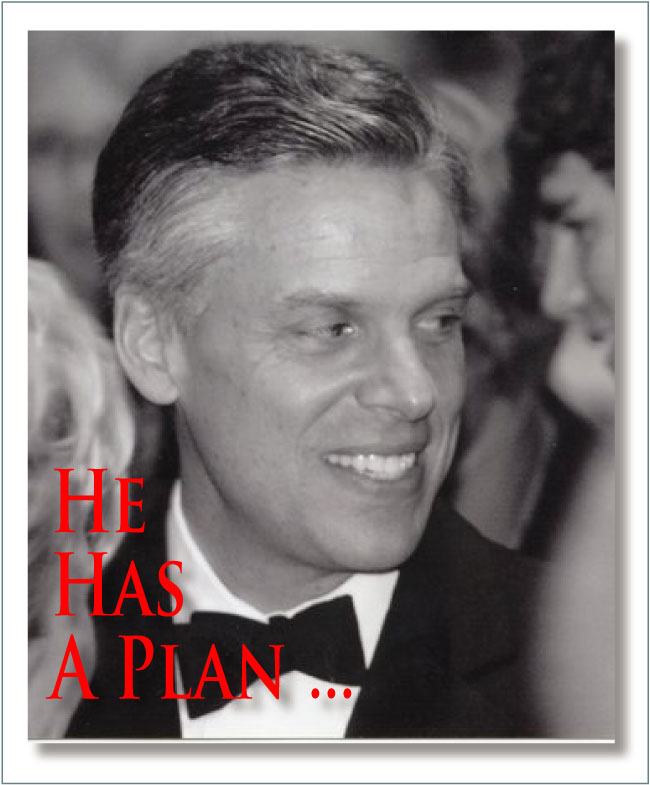
We have to wait for Obama’s plan, but Jon Huntsman has a plan. Right now: (pdf).
It sounds good.
However, there is this:
Michael Brendan Dougherty bills Huntsman as the “no-drama Conservative.”
Dougherty apparently thinks Conservatives are “dramatic?”
“…Huntsman.” he says, ”may be uncomfortable in the ideological sweathouse that is the conservative movement. He may be diplomatic when the right is dyspeptic.”
I had to look that one up. It means: “gloomy, pessimistic, and irritable.” Isn’t it nice that he distances Huntsman from a major portion of “his” party by mis-labeling millions of middle class Americans, the true “middle of the road,” referring to them as “dyspeptic.”
Dougherty says in The American Conservative:
“But his candidacy offers conservatives two very tantalizing possibilities: a break with the Bush legacy on foreign policy and the chance to move their policy prescriptions off the Tea Party’s placards and into the center of our political debate.”
The Tea Party is what? Radical? Extreme?
Mr. Dougherty: The Tea Party has broken with the Bush legacy. Did you not notice they want a balanced budget? Did you not notice that they want to curtail spending?
“Huntsman’s record,” he writes, “shows that conservative politics can triumph not just through conflict but also by concord.”
Dougherty positions Conservatives as causing conflict and as being without concord? We disagree with the Socialism of Bush and the Socialism of Obama, Mr. Dougherty. Socialism is in discord with American Free Enterprise.
It appears that Dougherty, at least, and it seems, Huntsman, missed what a substantial number of Americans have gotten to know as the Tea Party, the 9-12 movement, and most importantly, the mandates of the 2010 election.
Unless of course, that is the strategy of his campaign. Obama and the Socialist cult have also chosen to ignore that those elections even occurred. Instead they have chosen not to respect the wishes of Americans fed up with big government Socialism; they have chosen not to acknowledge that the Socialist majority in the House of Representatives was wiped out, and they have chosen instead to pretend that nothing happened in 2010.
“What Tea Party?”

Huntsman’s plan sounds like a good plan. But his web-site displays Dougherty’s article as a compliment to Jon Hunstman and his campaign.
How, I wonder, does Jon Huntsman reconcile his “plan” on the one hand, and yet on the other, if Dougherty’s article is correct, marginalize the American majority called the Tea Party?
Huntsman bills himself as a “moderate.” Yet he denies and shuns the true moderates of America, the Tea Party. The Socialists continue to label and position the Tea Party as radical and extreme.
What Huntsman should have done is, yes, billed himself as a “moderate.” Then he should have embraced the Tea Party, as America’s “moderate” majority, renounced the Socialists mis-labeling of the Tea Party, and adopted the Tea Party plank as his own, while marginalizing those that continue to hum the mantra that the Tea Party is racist, radical, and extreme.
Unfortunately he has not done this, and so he and his campaign appear to be lost.
And as it is with those that are lost, there is always someone that will tell them where they should go.
How do you see it? What do you think?
Vanguard of Freedom Network / Patriot Action Network / Liberty News Network